Documentary Meets Editorial: Flash, Motion Blur, and Why I Still Shoot Film in 2026
Every couple who reaches out eventually asks some version of the same question: what's your style? It's a fair question, and it deserves a real answer rather than a one-word label pulled off a dropdown menu. So here's mine: I shoot documentary, but I don't stop there. I want the real moment and I want it to look like it belongs in a magazine — which means blending an unscripted, documentary way of working with an editorial eye for light, composition, and framing, and using every technical tool available, from flash to film, in service of that.
I'm not choosing between real and beautiful. I'm refusing to pick.
In this post
Documentary: I'm Not Directing Your Wedding
Documentary, to me, means I'm not staging your day for the camera — I'm following it. The best images from any wedding I've shot are almost never the ones I asked for. They're the ones that happened while I was quietly somewhere in the room: a look between you and your father before he walks you down, the exact second your partner sees you for the first time, the chaos and joy of a dance floor nobody choreographed. My job in those moments is to be close enough, ready enough, and unobtrusive enough that you forget I'm there at all.
That matters more in a place like Lake Como or the French Riviera than almost anywhere else, because the setting is already doing so much work. Heavy posing against a backdrop that dramatic can actually undercut it — the villa, the water, the light don't need help looking beautiful. They need space to be photographed honestly.
[ Candid moment — an unposed, in-between-moments shot ]
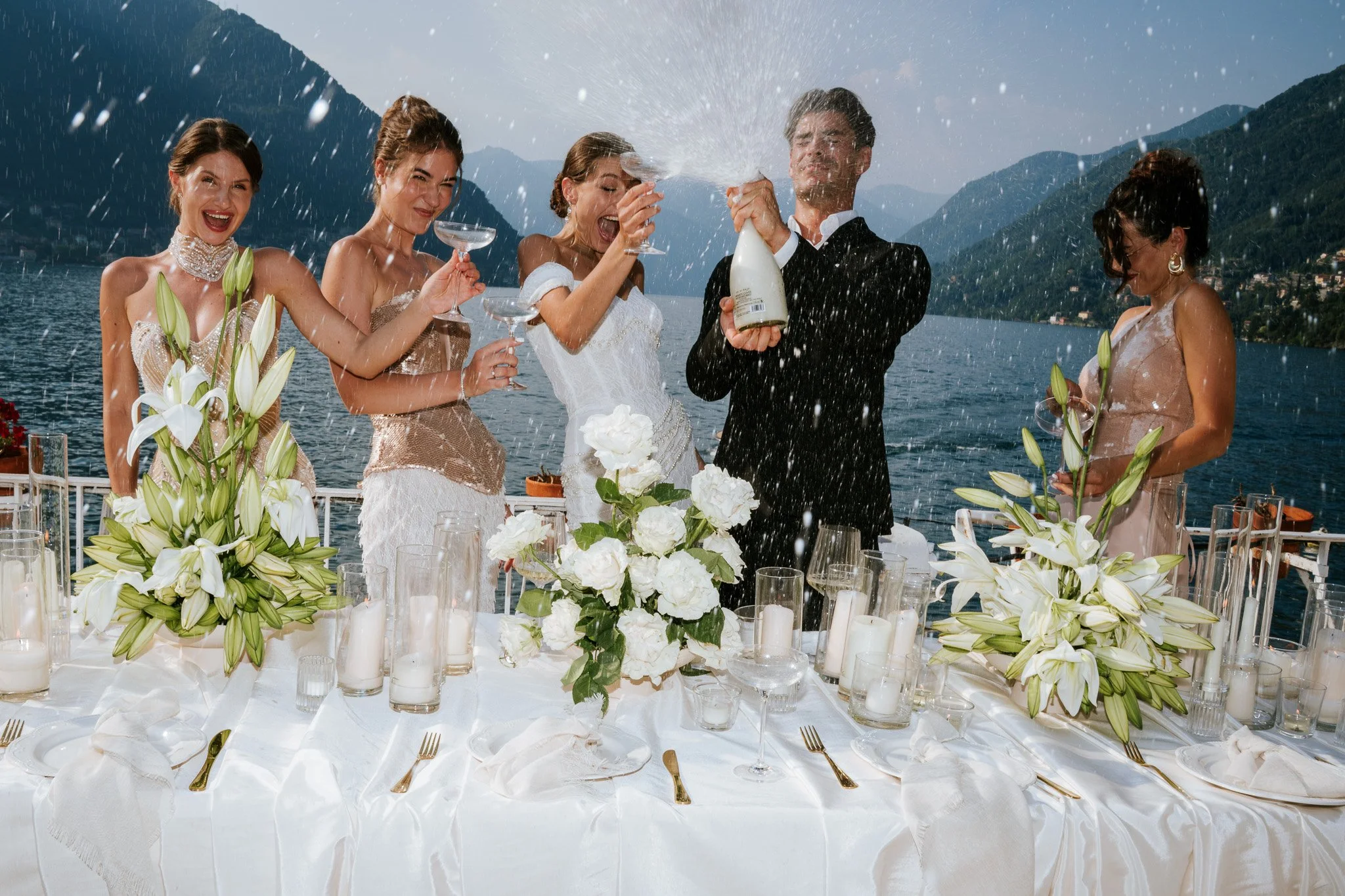
[Caption: The champaign exploded without agitating]
Editorial: But I Still Compose Every Frame
Where I part ways with a purely documentary approach is composition. Being unobtrusive doesn't mean being passive — I'm still constantly reading the light, the lines of the room, where you are relative to the background, and moving myself to put all of that together into a frame that would hold up on its own as a photograph, not just as a record of what happened. That's the editorial instinct: treating a candid moment with the same visual care a fashion shoot gets, even though nothing about the moment itself was staged.
It's the difference between a photo that documents your wedding and a photo you'd actually want printed and framed. I want every gallery I deliver to have both — images that feel completely true to the day, and images that feel considered, elevated, intentional.
In practice, this looks like:
Positioning myself for the best light and background before a real moment happens, rather than interrupting it once it does
Composing candids with the same attention to framing, negative space, and line that I'd bring to a planned portrait
Never asking you to "do that again" for the camera — if I miss it, I miss it, and I'd rather move on than fake it
Why I Use Flash Outdoors, in Full Sun
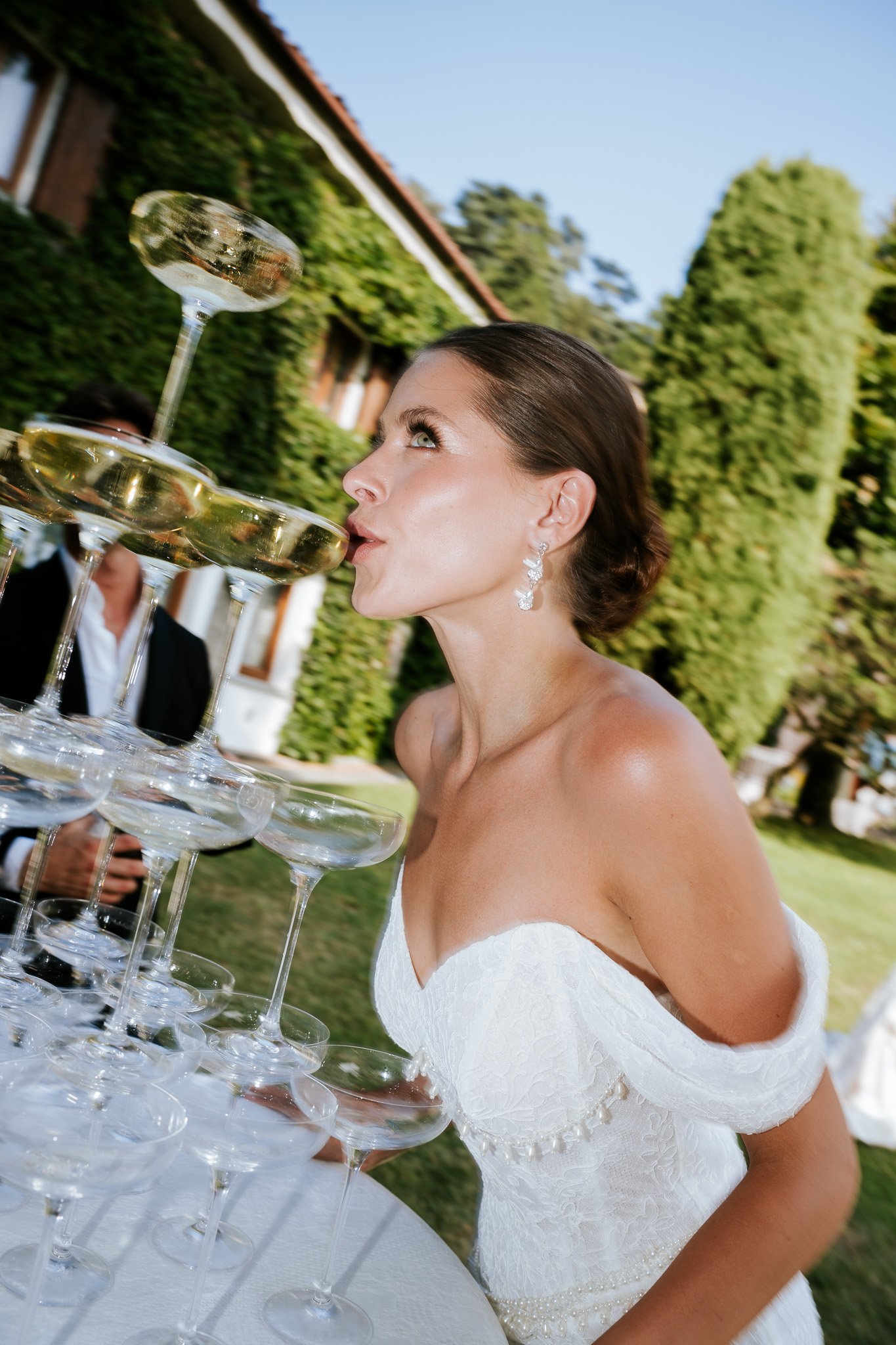
This summer, shooting a couple's session at Villa del Balbianello, we were out at midday — full sun, high and hard, the kind of light that carves deep shadows under the eyes no amount of good posing fixes on its own. A natural-light purist would have just accepted those shadows, or told the couple to come back at a better hour. I brought in flash instead.
Here's why that works: bright midday sun creates a huge gap between the brightest and darkest parts of a scene — a blown-out sky next to shadows so deep they lose all detail. Neither film nor a digital sensor can hold that entire range at once. Fill flash closes that gap. It adds just enough light into the shadow side of your face to bring the contrast down to something the camera can actually capture cleanly, without touching how bright the sky or background looks. The result is a properly exposed couple against a rich, saturated sky, instead of a couple in harsh shadow under a blown-out white one. It's also the reason I never have to turn a couple away because their only available hour is high noon — I'd rather solve the light than avoid it.
Why I Use Flash Indoors
Indoors is a different problem with the same solution. Villa interiors, evening receptions, a dimly lit reception hall — the ambient light is often too low, too orange, or too uneven to expose properly without pushing the ISO so high the image turns to noise, or the shutter so slow that any movement blurs. Flash indoors gives me a controlled, directional light source — often bounced off a ceiling or wall to soften it — so I can properly expose you without following you around with a visible spotlight or losing a moment entirely to a dark, blurry frame.
It's also what lets me keep working right through the parts of the night everyone else's camera gives up on: speeches in a dim room, the first dance, the last hour on the dance floor when the only light left is string lights and chaos.
How Flash Actually Freezes Motion
This is the part most people don't expect: a flash doesn't freeze motion because it's bright. It freezes motion because the burst of light itself is extremely short — often somewhere between 1/1,000 and 1/20,000 of a second, depending on the power I've set it to. Counter-intuitively, lower power means a shorter, faster burst, not a longer one.
If the flash is providing most of the light hitting you in that instant, its duration effectively becomes your shutter speed for that moment — regardless of what the camera's actual shutter is set to. That's how I can freeze a spinning dress or a champagne cork mid-air in a dim reception room, even when the camera's shutter speed on its own is nowhere near fast enough to do that.
[ Midday portrait using fill flash ]
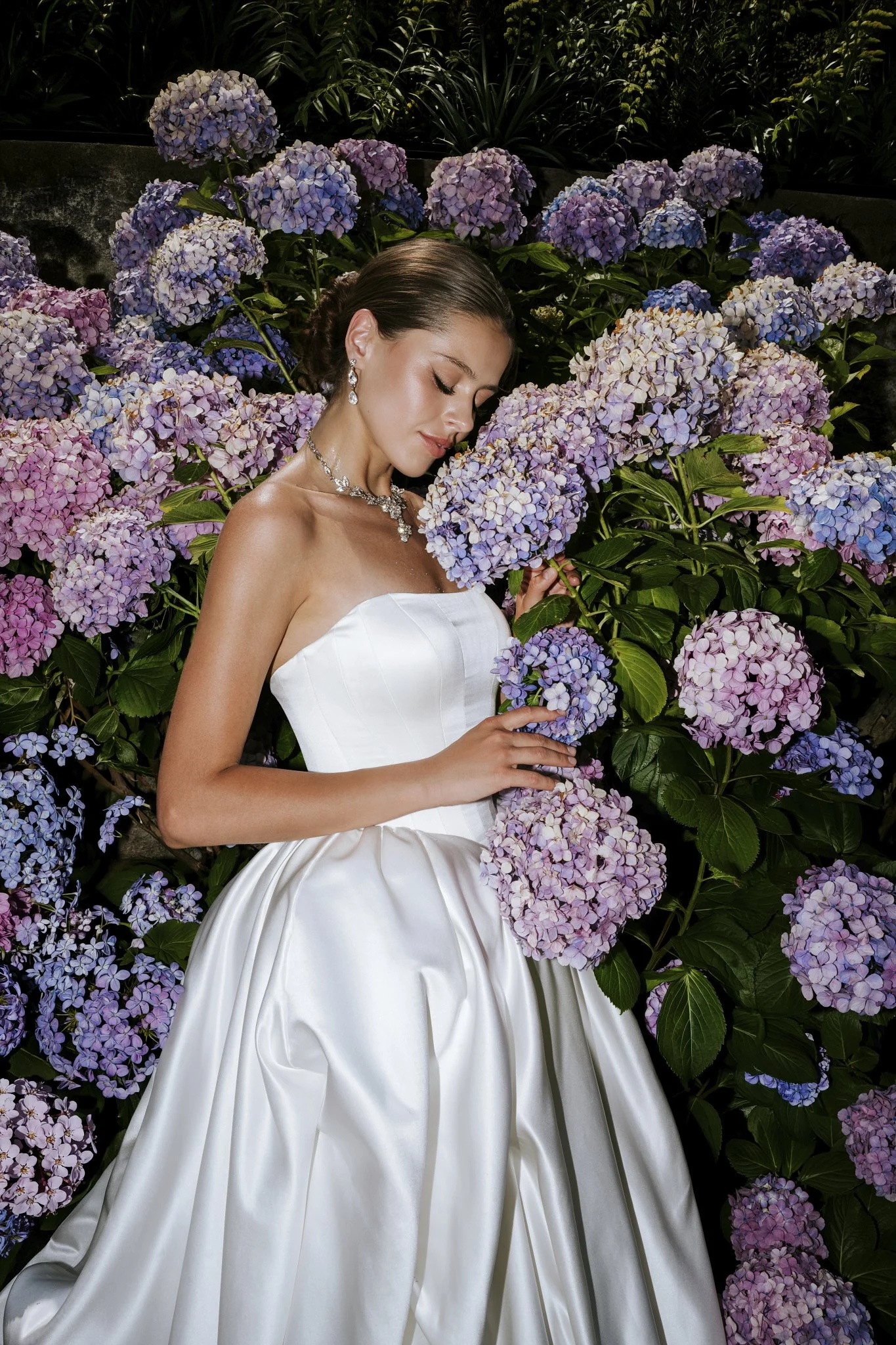
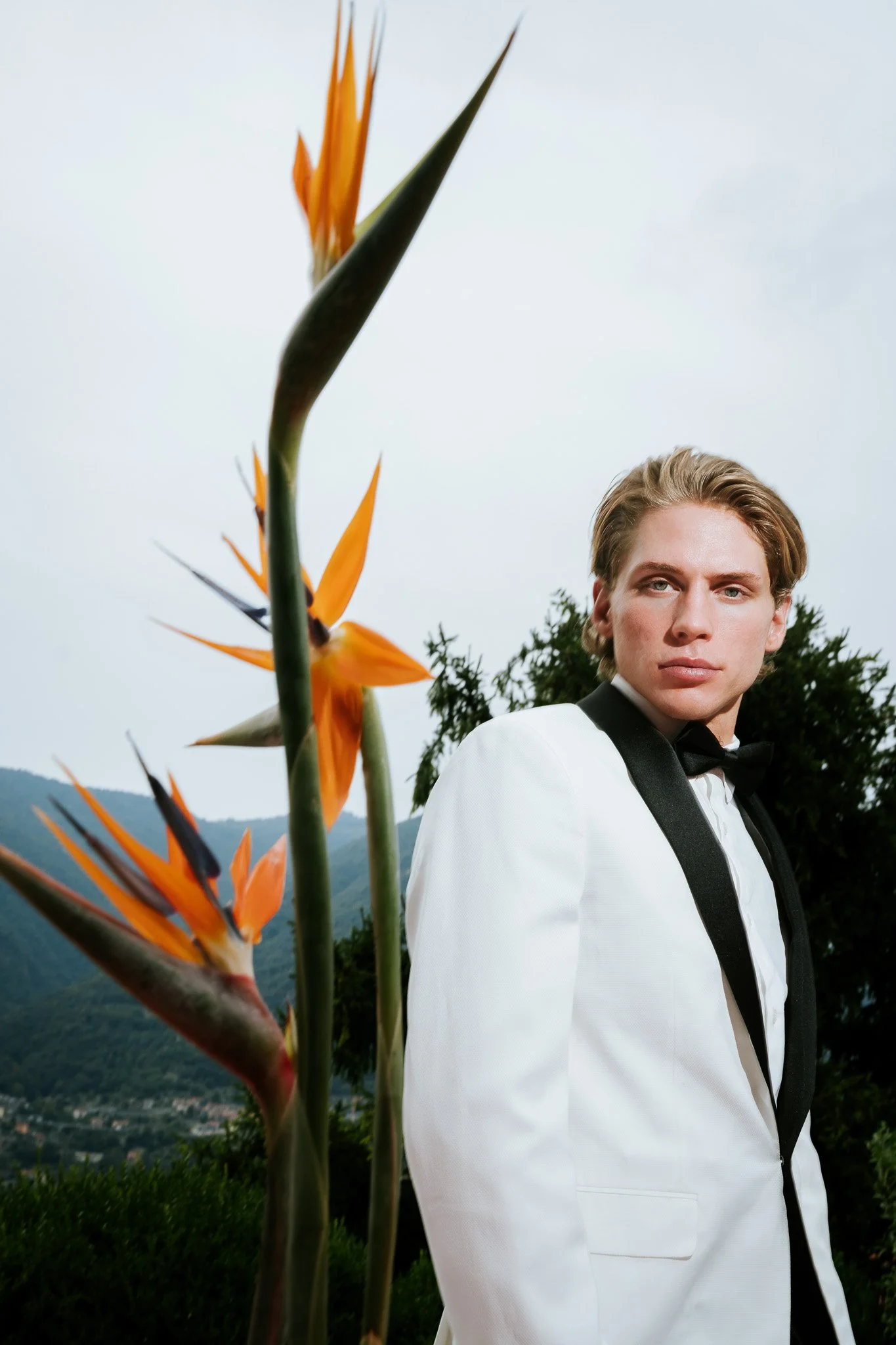
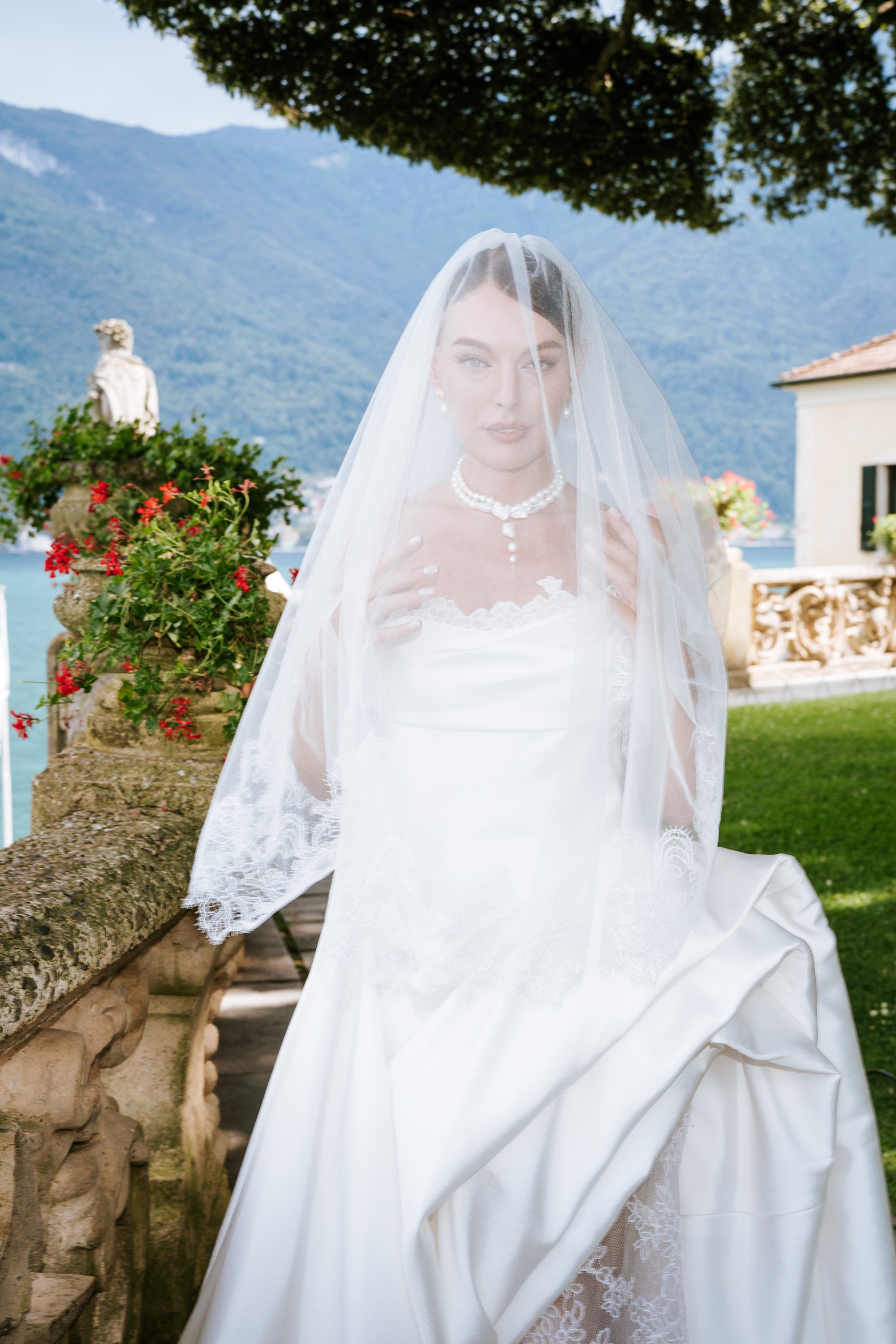
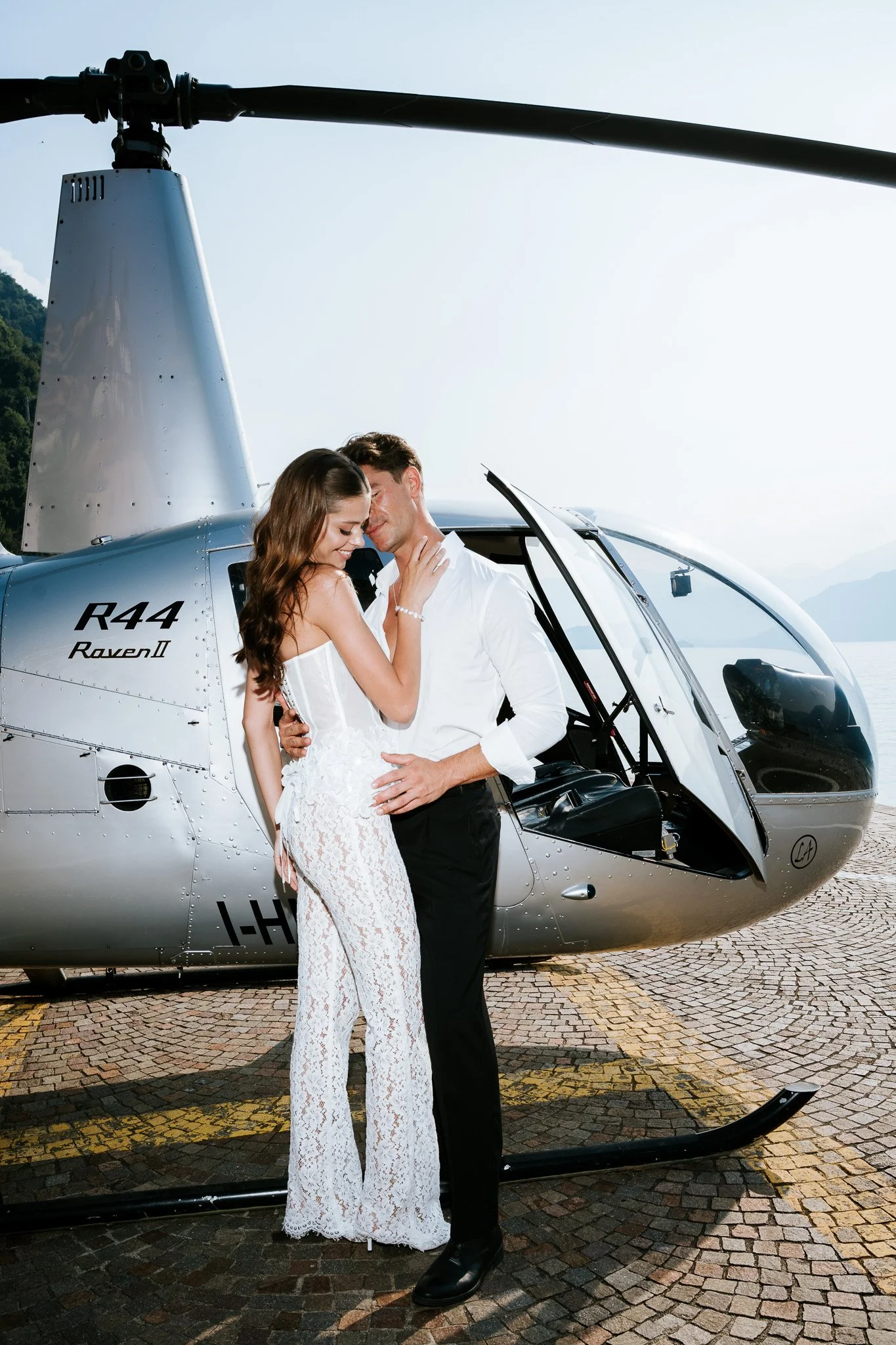
[Caption: midday sun, fill flash]
And Sometimes I Do the Opposite: Motion Blur
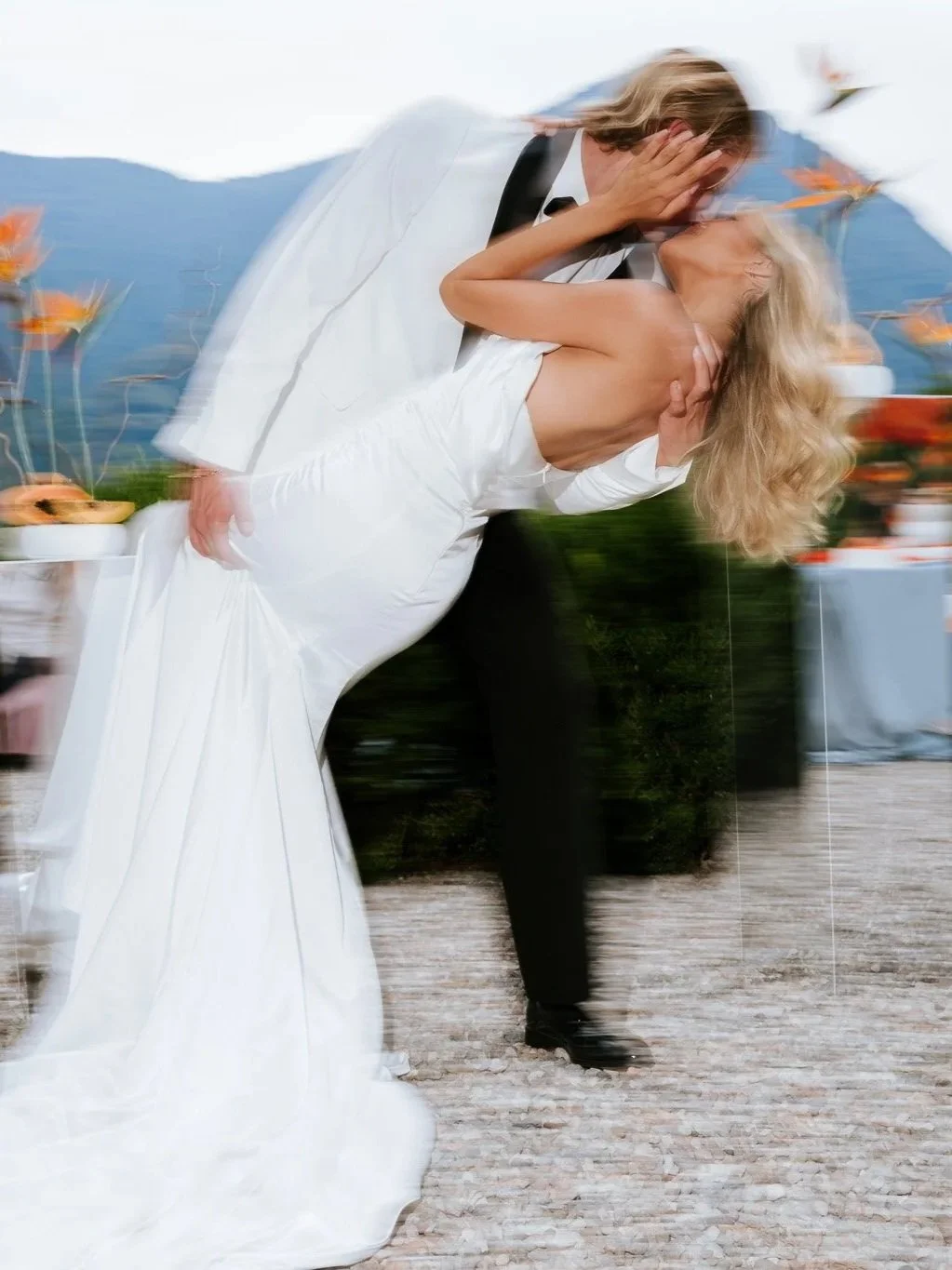
Sometimes freezing everything sharp isn't what a moment needs — motion itself is the story. For that, I do the reverse of everything above: drop the shutter speed right down, sometimes to a tenth of a second or slower, while still firing the flash — timed to fire at the end of the exposure rather than the start, so any blur trails behind the movement rather than smearing in front of it.
That flash burst still freezes one sharp, clear instant inside the frame, but the slow shutter around it captures a trail of everything that moved during the rest of the exposure — the swing of a dress, a streak of string lights, hands thrown up on a dance floor. It's a much harder shot to get right, and it isn't the right call for most moments, but for the ones it's built for — an exit, a spin during the first dance, a room mid-celebration — it captures a sense of energy and speed that a perfectly sharp image simply can't. A still photograph that shows you how fast something was moving is one of the strangest, most effective tricks in this whole craft, and it only works because I know exactly when to break the "freeze everything" rule.
[ Motion blur shot — dance floor, spin, or exit with light trails ]
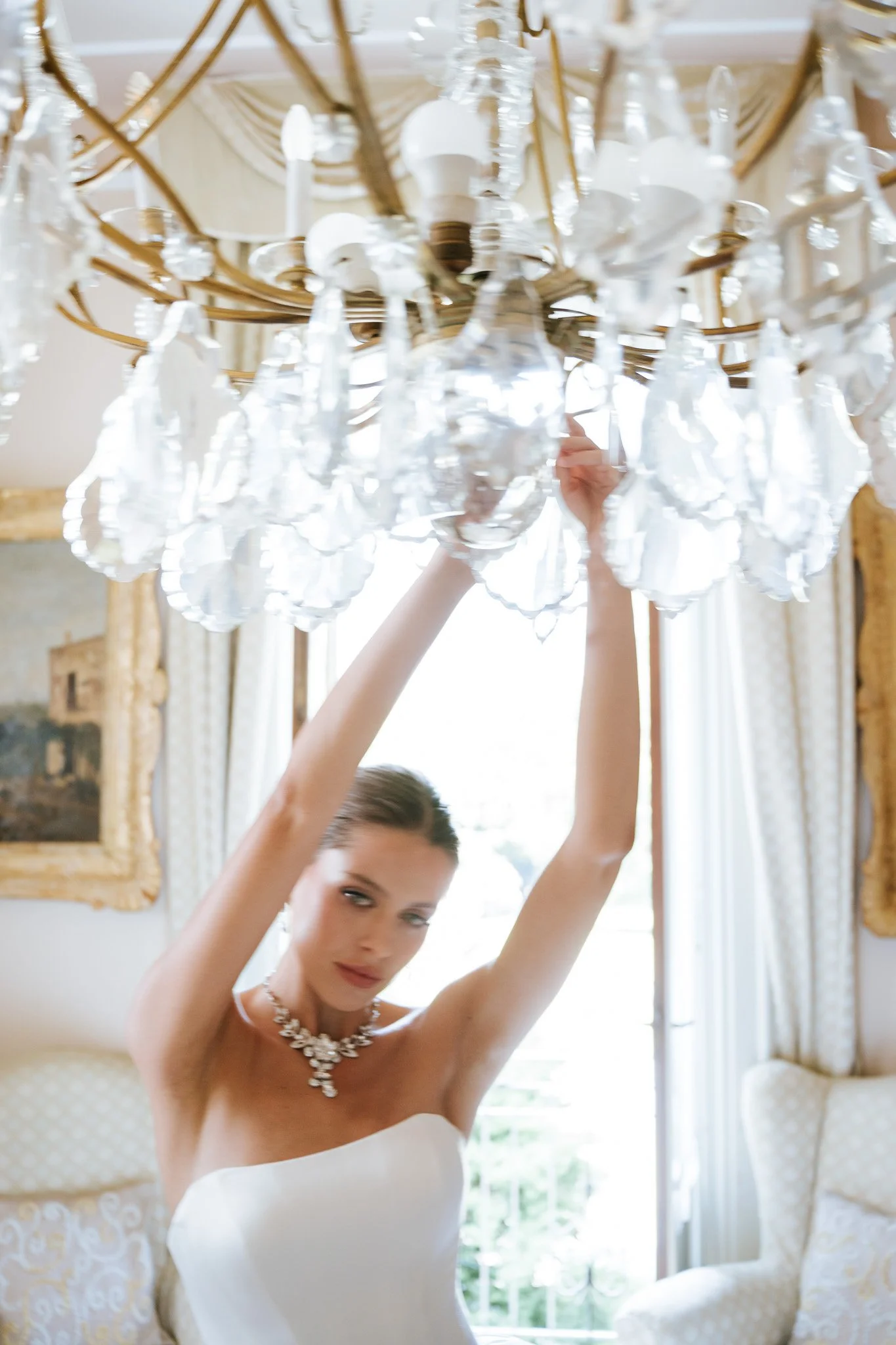
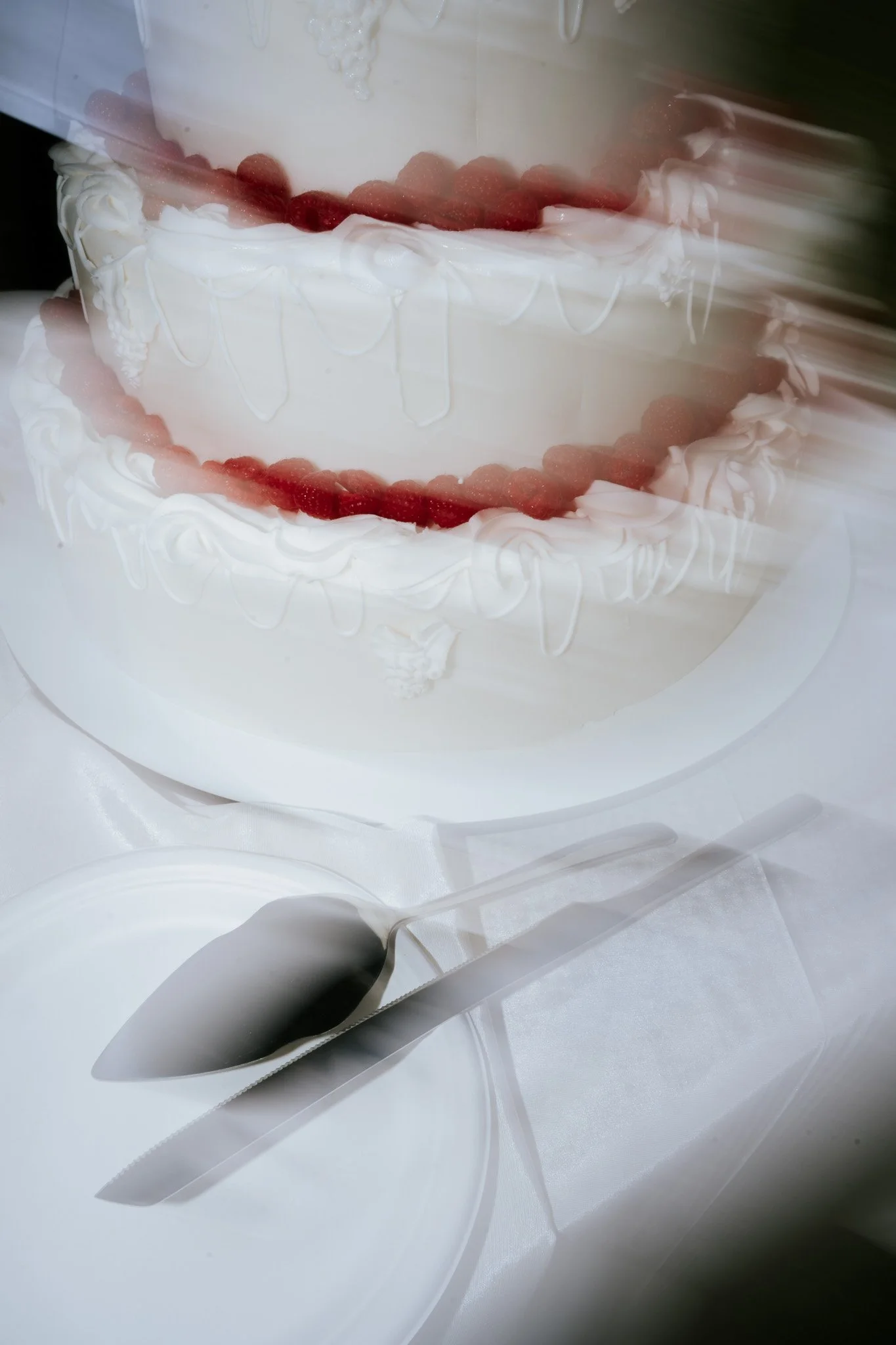
[Caption: slow shutter + rear-curtain flash]
Why I Still Shoot Film in 2026
Some parts of a wedding — getting ready, the walk to the ceremony, a quiet exchange before anyone else has arrived — I shoot on film, alongside digital, not instead of it. Partly that's about how film looks. Mostly, honestly, it's about how it makes me work: a roll gives me a fixed, small number of frames and no screen on the back to check my work, which forces a kind of presence and intention that's easy to lose when you can fire off forty digital frames a second and sort it out later. Film doesn't let me hide behind volume.
This isn't nostalgia for a dying medium, either — quite the opposite. Demand for Portra alone is up over 150% since 2020, hundreds of new film labs have opened worldwide in the past year alone, and prices have climbed accordingly — a roll of Portra 400 that cost around $13 a few years ago runs closer to $18–20 now. Photographers keep paying it anyway, because nothing digital fully replicates what film does with light and skin.
Why Portra 400
Kodak Portra 400 is, in my opinion, still the best all-around wedding film in production. It has an unusually wide exposure latitude, which means it's forgiving if I'm a stop off while chasing a real moment rather than carefully metering a posed one. Its skin tones are warm and accurate across a wide range of complexions and lighting conditions. It has fine grain for a 400-speed stock, so it holds up printed large. And it's versatile enough to go from full sun to open shade without switching stocks mid-day. That combination is exactly why it's the industry-standard choice for wedding and portrait photography, and why I keep reaching for it despite the rising cost per roll.
Why 6x7 Medium Format
The other deliberate choice is format: I shoot 6x7 medium format, not 35mm. The comparison I give couples who ask is Christopher Nolan and IMAX — he shoots on the largest film format available not because it's convenient (it's heavier, slower, and harder to work with than almost any alternative) but because a bigger negative captures more detail, smoother tonal transitions, and a different sense of presence than a smaller frame ever could.
6x7 does the same thing at portrait scale. The negative is roughly four times the surface area of a 35mm frame, which means more resolution, a shallower and creamier depth of field at the same aperture, and an aspect ratio much closer to a true 4:5 print than 35mm's 3:2. It's also, deliberately, slow: a roll of 120 film gives me exactly ten frames on a 6x7 back. Every single one has to earn its place — which is really just the same discipline that runs through everything else about how I work, applied to the camera itself.
[ A 6x7 medium format film frame ]
6 by 7 medium format film photography
[Caption: shot on Portra 400, 6x7]
The Part That Doesn't Change: True Emotion
Every choice above — documentary versus posed, flash versus natural light, frozen versus blurred, film versus digital — is a tool in service of one thing I won't compromise on: the emotion has to be real. Not performed for the camera, not smoothed into something more "Instagram," just what actually happened between two people on the best day of their lives so far. Years from now, the framing and the light and the grain will all read as beautiful. But it's the realness of what's happening in the frame that will make you feel something when you look at it again.
Constantin Weddings photographs luxury destination weddings across Lake Como, the French Riviera, the Amalfi Coast, and Monaco, blending documentary storytelling with an editorial eye, on both digital and film. If this approach sounds like what you're looking for, get in touch — I'd love to hear about your day.