Lake Como vs French Riviera vs Amalfi Coast vs Monaco: A Photographer's Guide to Choosing Your Destination Wedding
Four coastlines, four completely different weddings. Couples planning a luxury European celebration almost always narrow their shortlist to the same four names — Lake Como, the French Riviera, the Amalfi Coast, and Monaco — and then spend months going back and forth between them, usually working from Pinterest boards rather than practical differences.
Having photographed and scouted across all four, I can tell you the choice isn't really about which one is "the most beautiful." They all are, in different ways. It's about which combination of light, logistics, guest count, and legal process actually fits the wedding you're picturing. Here's the honest breakdown.
The Quick Comparison
Lake Como at a glance
Typical all-in budget: €120,000–€300,000 (60–100 guests)
Realistic guest capacity: comfortable to 150+ at larger villas
Legal ceremony: some licensed venues allow an on-site civil ceremony (rare in Italy, more common in the Italian Lakes); nulla osta appointment can take 4–8 weeks
Best light/season for photography: late May–June, September
Signature look: alpine lake, historic villas, soft green-and-blue palette
Guest travel: Milan airports, ~1 hour, boat transfers between venues
Photographer (full-day, established/luxury tier): €4,000–€9,000
Videographer (full-day, established/luxury tier): €3,000–€6,500
French Riviera at a glance
Typical all-in budget: €100,000–€200,000+ (80 guests, coastal)
Realistic guest capacity: flexible, 50–200+
Legal ceremony: civil ceremony must take place at the town hall itself — no venue exception; most opt for symbolic on-site
Best light/season for photography: late May–June, September (avoid August haze)
Signature look: Mediterranean coast, azure water, pastel hill towns
Guest travel: Nice airport, straightforward road access
Photographer (full-day, established/luxury tier): €3,500–€15,000+
Videographer (full-day, established/luxury tier): €3,000–€10,000+
Amalfi Coast at a glance
Typical all-in budget: €70,000–€110,000 (80 guests, classic tier)
Realistic guest capacity: constrained — most venues top out at 40–60
Legal ceremony: heaviest paperwork in the group; nearly all opt for symbolic
Best light/season for photography: late May–June, September (very narrow window)
Signature look: dramatic cliffs, lemon groves, saturated colour
Guest travel: Naples airport, 1.5–2 hours, narrow coast roads, minibus/boat only
Photographer (full-day, established/luxury tier): €4,000–€9,000
Videographer (full-day, established/luxury tier): €3,000–€6,000
Monaco at a glance
Typical all-in budget: €180,000–€400,000 (mid-size)
Realistic guest capacity: small and exclusive by nature
Legal ceremony: requires 30-day residency of one spouse; almost no foreign couples marry legally here
Best light/season for photography: April–June, late September–October
Signature look: Belle Époque glamour, yachts, compact old-world elegance
Guest travel: Nice airport, 30 minutes, easiest access of the four
Photographer (full-day, established/luxury tier): €6,000–€15,000+
Videographer (full-day, established/luxury tier): €5,000–€12,000+
Budgets above are 2026 ranges for a full, planner-led celebration and vary widely by venue, guest count, and season — think of them as a starting point for your own conversation with a planner, not a fixed number.
Lake Como: Old-World Elegance With Room to Breathe
Como is the destination for couples who want the fairytale villa without sacrificing guest count. Villas like Villa del Balbianello, Villa Balbiano, and Grand Hotel Tremezzo can comfortably host 100+ guests, and the alpine backdrop gives every frame a softness that coastal light doesn't have. The trade-off is logistics: because most of the best venues sit directly on the water, boat transfers become a non-negotiable part of the day, not an optional flourish. That's actually a gift for photography — arriving by private boat is one of the most cinematic moments a wedding day can offer — but it does add a line item and a layer of planning most couples don't anticipate on their first visit.
Venues worth researching in Lake Como
Villa del Balbianello (Lenno) — the most photographed villa on the lake; strict conservation rules mean access and photography permits need the earliest lock-in of any venue here.
Villa Balbiano (Laglio) — a full-property lakefront estate for multi-day, exclusive-use celebrations.
Grand Hotel Tremezzo (Tremezzina) — a five-star hotel with built-in event infrastructure and an iconic floating pool over the lake.
Villa d'Este (Cernobbio) — one of the grandest historic hotels on the lake, with formal gardens and a centuries-old pedigree.
Villa Erba (Cernobbio) — a design-house estate with some of the largest indoor reception spaces on the lake.
Mandarin Oriental, Lake Como (Blevio) — a contemporary five-star resort with private lake access and its own boat fleet.
Villa Passalacqua (Moltrasio) — an ultra-intimate, design-forward boutique property, among the newest luxury openings on the lake.
Villa Monastero (Varenna) — botanical gardens running straight into the water, on the lake's quieter eastern shore.
Villa Melzi (Bellagio) — neoclassical gardens and lakeside promenades right in the heart of Bellagio.
Grand Hotel Villa Serbelloni (Bellagio) — a storied five-star hotel perched above Bellagio with panoramic views over both branches of the lake.
French Riviera: Coastal Glamour, Serious Infrastructure
The Riviera wins on flexibility. You can have a full sea-view celebration in Cannes or Saint-Tropez, or step twenty minutes inland to Grasse or Mougins for the same golden light with a lower price tag and more privacy. The region has the deepest, most established vendor network of the four — planners, caterers, and florists here have handled international weddings for decades, which shows up as fewer surprises on the day. It's the destination I'd point a couple toward if they want coastal drama but also want the planning process itself to feel calm.
Venues worth researching on the French Riviera
Hôtel du Cap-Eden-Roc (Cap d'Antibes) — the Riviera's most storied luxury hotel, set on 22 acres directly on the water.
Grand-Hôtel du Cap-Ferrat, A Four Seasons Hotel (Saint-Jean-Cap-Ferrat) — a Belle Époque palace with gardens running down to its own private beach.
Villa Ephrussi de Rothschild (Saint-Jean-Cap-Ferrat) — Belle Époque gardens and a Palladian-style palace overlooking the bay.
Château de la Chèvre d'Or (Èze) — a clifftop château perched in the medieval village of Èze, with sweeping Mediterranean views.
Hôtel Belles Rives (Juan-les-Pins) — an Art Deco hotel with its own private beach, once the summer home of F. Scott and Zelda Fitzgerald.
Cap Estel (Èze-bord-de-mer) — a private peninsula hotel that feels like its own island, built for the most intimate celebrations.
Royal Riviera (Saint-Jean-Cap-Ferrat) — a smaller, design-led luxury hotel on the same peninsula as the grander palaces.
Château le Cagnard (Haut-de-Cagnes) — a medieval hilltop château with panoramic terraces above the coast, suited to smaller, more private weddings.
Villa La Vigie (Roquebrune-Cap-Martin) — a private clifftop estate looking directly across the bay toward Monaco.
Le Park Mougins (Mougins) — a hinterland estate in the Riviera's perfume-country hills, twenty minutes inland from the coast.
Amalfi Coast: The Most Photogenic, the Least Forgiving
Nothing photographs like the Amalfi Coast. The cliffs, the lemon groves, the impossible colour of the water — it's the most visually dramatic of the four destinations, without question. But the coast's geography is also its biggest constraint: narrow roads mean no large coaches, most venues cap out around 40–60 guests, and the reliable wedding season is genuinely short — late May into June, then September. Couples who fall in love with Positano or Ravello need to go in clear-eyed about scale. This is the destination for an intimate, visually maximalist celebration, not a 150-person weekend.
Venues worth researching on the Amalfi Coast
Villa Cimbrone (Ravello) — a 12th-century palace whose gardens end at the cliffside "Terrace of Infinity," arguably the coast's most prestigious address.
Belmond Hotel Caruso (Ravello) — perched 365 metres above the sea with a cantilevered infinity pool and terraced gardens.
Palazzo Avino (Ravello) — a five-star hilltop hotel with a Michelin-starred restaurant, overlooking the coast's fishing villages.
Le Sirenuse (Positano) — a boutique luxury hotel built into the hillside, home to the Michelin-starred La Sponda.
Hotel Marincanto (Positano) — a cliffside infinity pool and private beach access, with sweeping views over Positano's rooftops.
Villa Treville (Positano) — a smaller, more intimate clifftop villa just outside the centre of Positano.
Hotel Santa Caterina (Amalfi) — a family-run five-star hotel built into the cliff, with its own private beach and a lift down to the water.
Hotel Luna Convento (Amalfi) — a former 13th-century convent perched directly on the cliff above Amalfi town.
Monastero Santa Rosa (Conca dei Marini) — a converted 17th-century monastery with what may be the coast's most photographed infinity pool.
Casa Angelina (Praiano) — a sleek, minimalist boutique hotel in the quieter village between Positano and Amalfi.
Monaco: Compact, Exclusive, Unapologetically Luxurious
Monaco isn't really competing with the other three on guest count or budget-per-head — it's a different category entirely. The Principality is small, so celebrations here tend to be small and extraordinarily curated: a yacht, a Belle Époque terrace, a Michelin dinner for forty rather than a garden party for two hundred. The legal picture is the strictest of the group by far — a civil marriage requires one spouse to have been a Monaco resident for 30 days, so virtually every international couple treats Monaco as the setting for a symbolic ceremony and celebration, with the legal marriage handled separately at home or in a neighbouring French commune. For couples who want maximum glamour in a minimum footprint, nothing else compares.
Venues worth researching in Monaco
Hôtel de Paris Monte-Carlo — the flagship of Monaco's grand hotels, with a glass-domed atrium and private salons overlooking Casino Square.
Hôtel Hermitage Monte-Carlo — home to the Belle Époque Salle, a glass-domed dining hall with ironwork and stained glass dating to 1900.
Hôtel Metropole Monte-Carlo — a Belle Époque address dating to 1886, in the heart of the Carré d'Or shopping district.
Fairmont Monte Carlo — a large-scale resort with sea-view ballrooms, well suited to bigger celebrations.
Monte-Carlo Bay Hotel & Resort — a contemporary property with four hectares of gardens and a lagoon-style pool.
Monte-Carlo Beach — a chic, modern seafront venue just along the coast from the main Monte-Carlo district.
Yacht Club de Monaco — a Norman Foster-designed building overlooking Port Hercule and its superyachts.
Salle Garnier, Opéra de Monte-Carlo — a jewel-box 19th-century opera house inside the Casino de Monte-Carlo.
Jardin Exotique — clifftop botanical gardens with panoramic views over the Principality, popular for ceremonies.
Sporting Monte-Carlo — a seafront events complex known for large-scale galas and receptions.
What Photography and Videography Actually Cost in Each Destination
This is the line item couples most often under-budget for, so it's worth pulling out on its own. In Lake Como, established full-day photographers typically run €4,000–€9,000, with videography adding €3,000–€6,500 on top — the villa setting and boat arrivals push toward the higher end because they simply take longer to shoot well. The French Riviera has the widest spread of the four: solid full-day coverage starts around €3,500, but the region's concentration of editorial, magazine-featured studios means ultra-luxury packages regularly reach €15,000 for photography and €10,000+ for videography, particularly for multi-day coverage spanning a welcome dinner, ceremony, and departure brunch.
Amalfi Coast pricing sits close to Como's — €4,000–€9,000 for photography, €3,000–€6,000 for video — though the coast's narrow roads and cliffside access mean a good team is doing more physical work per hour than almost anywhere else on this list, which is worth asking about when you compare quotes. Monaco is the outlier: because the market caters almost exclusively to ultra-high-net-worth clients, even entry points into "luxury" photography start around €6,000, with most couples investing €8,000–€15,000+, and videography tracking close behind at €5,000–€12,000+.
Two things hold true across all four destinations. First, day-rate alone isn't the useful comparison — ask what's actually included (second shooter, drone, engagement session, album, turnaround time) before comparing two quotes side by side. Second, a photographer or videographer who already knows the venue — where the light falls at 6pm on a Como terrace, which Amalfi road closes for the ferragosto crowds, what Monaco's grand hotels will and won't permit — routinely saves more in stress and reshoots than their fee, which is exactly why local, destination-specific experience commands a premium in all four markets.
The Legal Ceremony Question, Across All Four
One thread runs through every destination on this list: nearly all of them make a fully legal ceremony genuinely complicated for foreign couples, whether through residency requirements, banns, or a nulla osta process that can take months. In practice, the overwhelming majority of international couples getting married in Lake Como, the Riviera, Amalfi, or Monaco handle the legal paperwork quietly at home — sometimes weeks in advance, sometimes the morning of the flight out — and treat the destination ceremony as the one that actually matters emotionally and photographically. If a legally binding ceremony on-site is important to you, build in extra lead time and loop in your planner on this early; it shapes the whole timeline.
There's one structural quirk worth knowing if Lake Como and the French Riviera are both on your shortlist. France draws a hard line: the civil ceremony must happen at the town hall (mairie), full stop, with no exceptions for even the grandest château or hotel. Italy is more flexible in principle — a small number of venues, concentrated in Tuscany and the Italian Lakes, are actually licensed to host a legally binding civil ceremony on-site, which means a couple could in theory marry for real and celebrate in the same place the same day. In practice this only applies to specific licensed properties, and the nulla osta appointment behind it still needs booking 4–8 weeks out in peak season, so it's a possibility to investigate with your venue directly rather than something to assume is available everywhere on the lake.
Frequently Asked Questions
Is Lake Como or the Amalfi Coast better for photography?
Both are exceptional but produce very different images. Como gives you soft, layered alpine light and grand architectural backdrops that suit larger, more formal celebrations. Amalfi gives you high-contrast drama — cliffs, colour, and the sea as a constant presence — and rewards smaller, more intimate guest lists.
Which is the most affordable of the four destinations?
The Amalfi Coast's "classic" tier (around €70,000–€110,000 for 80 guests) tends to run below Lake Como and the coastal French Riviera for a comparable scale, largely because venues are smaller. Monaco sits well above all three at every guest count.
Can we have a legally binding wedding in Monaco?
Only if one spouse has held Monaco residency for at least 30 days before the ceremony. Almost all international couples instead hold a symbolic ceremony in Monaco and complete the legal marriage in their home country or in France beforehand.
What's the best month to get married in these destinations for photography?
Late May through June and September, across all four locations. These months avoid the intense midday heat and haze of July–August while still offering long, warm evening light — the golden hour that makes destination wedding photography what it is.
How far in advance should we book a venue in these regions?
Twelve to twenty-four months, particularly for peak-season dates (June and September) at the most in-demand villas and hotels — Amalfi Coast venues especially, given how few properties can host larger groups.
Can we have a legally binding ceremony at the venue itself, not just a town hall?
In Italy, occasionally — a limited number of venues, mostly in Tuscany and the Italian Lakes, are licensed to host a legally binding civil ceremony on-site, so it's worth asking directly if this matters to you. In France, no: the civil ceremony must always take place at the mairie itself, regardless of how prestigious the venue is, which is why most Riviera couples handle the legal signing separately and treat the venue ceremony as symbolic.
How much should we budget for a photographer and videographer?
For established, destination-experienced professionals, expect roughly €4,000–€9,000 for photography in Lake Como or the Amalfi Coast, €3,500–€15,000+ on the French Riviera depending on tier, and €6,000–€15,000+ in Monaco. Videography typically runs €3,000–€6,500 in Como and Amalfi, and climbs higher on the Riviera and in Monaco at the luxury end — budget it as a near-equal line item to photography, not an afterthought.
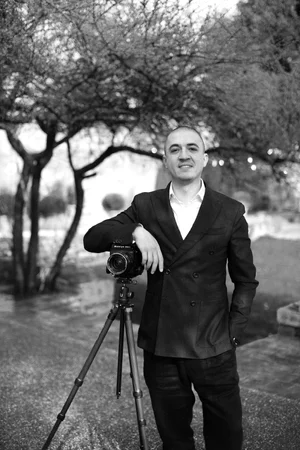
Constantin Weddings photographs luxury destination weddings across Lake Como, the French Riviera, the Amalfi Coast, and Monaco. If you're weighing these destinations against each other, get in touch — happy to talk through what each one actually looks like through a camera.